

Traumatic brain injuries (TBIs) are uniquely challenging personal injury cases. Because in addition to pain and suffering symptoms like memory loss, chronic headaches, and cognitive fatigue often appear days or weeks after a collision, insurance companies frequently argue that brain trauma was not caused by the accident, and they want to dismiss your traumatic brain injury, skull fractures, diffuse axonal injury, or orthopedic injury.
To overcome these defense strategies, crash victims must build an early, objective paper trail. Obtaining official accident reports for a brain injury claim establishes the exact physical mechanics of the collision, verifies immediate symptoms, and holds negligent parties accountable under California law to confirm a traumatic brain injury for the victim.
Why Are Accident Reports Important in a Brain Injury Claim?
In any personal injury lawsuit, official documentation serves as the foundational evidence insurers and courts use to evaluate claims. Some brain injuries frequently cause confusion or acute loss of consciousness at the scene, leaving victims unable to recall critical details due to this head injury.
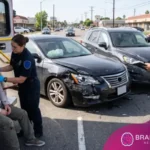
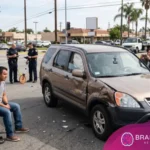
Formal incident from brain injury reports lock in key facts before memories fade or evidence disappears, as other cerebral contusions caused by brain injuries. They establish an official timeline, document car accidents, detail the severity of vehicle damage, record weather and road conditions, and capture impartial statements from eyewitnesses. These records link the physical impact directly to your subsequent medical diagnosis and future medical treatment for your possible traumatic brain injury.
How Can a Police Accident Report Support Your Case?
Whether filed by the California Highway Patrol (CHP) or a municipal police department, the primary law enforcement collision report is a cornerstone document. Officers undergo training to evaluate crash scenes, measure skid marks, and interview involved drivers.
Key elements inside a police report that strengthen your traumatic brain injury (TBI) claim include:
- Preliminary fault determinations and citations issued for California Vehicle Code violations.
- Diagrams illustrating vehicle placement, point of impact, and trajectory.
- On-scene observations of driver impairment, distraction, or excessive speed.
- Documentation of expressed physical symptoms or disorientation at the scene.
Understanding how crash dynamics affect cognitive function is essential in a motor vehicle accident; learn more about how physical impact evidence works alongside visual evidence in our guide on preserving videos after a car accident.
When Is a California SR-1 Report Required?
Under California Vehicle Code § 16000, drivers involved in a collision resulting in traumatic brain injury, bodily injury, brain injuries, death, or property damage exceeding $1,000 must file an SR-1 Report with the California Department of Motor Vehicles (DMV).
- The 10-Day Deadline: The SR-1 form must be submitted within 10 days of the accident, regardless of who was at fault or whether the collision occurred on private property.
- Driver License Consequences: Failing to file an SR-1 report within the required timeframe can lead to a mandatory driver’s license suspension by the DMV.
- Evidentiary Role: The SR-1 serves as an official state notification that a road traffic injury occurred, establishing a legal record of harm early in the process.
What Other Insurance and Accident Records Should You Keep?
Building an unshakeable case requires gathering all five essential accident reports for a brain injury claim:
- Police/ CHP Collision Report: The primary law enforcement evaluation detailing crash mechanics and driver citations.
- DMV SR-1 Form: The mandatory California state notification confirming injury or major property damage.
- Emergency Medical Services (EMS) Run Report: Anything related to medical documentation: Medical records capturing initial neurological evaluations, emergency room records, including early Glasgow Coma Scale (GCS) scores.
- Fire Department Incident Log: Documentation detailing vehicle extraction methods, airbag deployments, and cabin intrusion severity.
- Insurer First Notice of Loss (FNOL): Official claim records documenting initial injury disclosures made to insurance companies immediately following the event.
Do Accident Reports Prove Who Was at Fault?
While police reports carry significant weight during insurance settlement negotiations, an officer’s opinion does not automatically bind a court. In California civil litigation, police reports are often considered hearsay unless specific exceptions apply or the investigating officer testifies as an expert.
California follows a pure comparative negligence system. This means liability can be split among multiple drivers based on their percentages of fault. Accident reconstruction experts frequently use the raw data from police and fire logs, such as vehicle weight, momentum, and crush damage, to determine final liability percentages in complex traumatic brain injury (TBI) lawsuits.
If you are concerned about how prior health history might complicate fault or compensation, explore our breakdown on how a pre-existing condition’s impact on traumatic brain injury (TBI) claims is evaluated by insurance companies.
How Do Reports Work With Other Evidence in a traumatic brain injury (TBI) Claim?
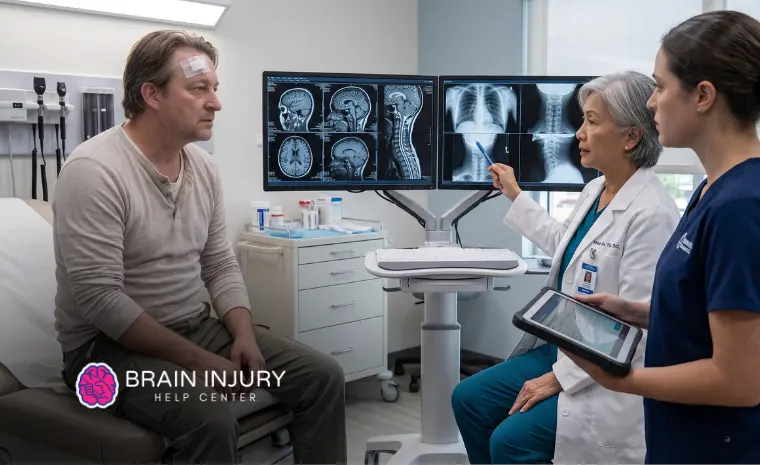
Accident reports do not exist in a vacuum; they provide the contextual framework for medical evidence along with the financial one. A brain injury attorney and medical experts cross-reference paramedic EMS reports with subsequent brain imaging scans (such as MRIs or CTs) and neuropsychological testing, CT scans all those medical records work.
When crash reports confirm high-velocity impact forces or severe vehicle deformation, medical professionals can clearly demonstrate to juries with medical evidence of why a victim developed post-concussive syndrome or permanent cognitive dysfunction as a result of a possible traumatic brain injury thanks to a brain scan, cognitive therapy, etc.
To understand the long-term professional consequences of severe head trauma, read our research summary regarding long term work disability risks after a TBI study.
What Should You Do If an Accident Report Contains an Error?
It is common for official reports to contain mistakes, ranging from minor clerical errors to incorrect fault assessments. Addressing these inaccuracies swiftly is crucial:
- Factual Typos: Errors involving mispelled names, incorrect insurance policy numbers, or wrong street names can usually be corrected by providing documentation to the investigating officer.
- Disputed Conclusions: If an officer misquotes a statement or draws an inaccurate conclusion regarding fault, you can submit a formal written narrative or additional evidence requesting that a supplemental report be attached.
Navigating officer interviews and amending police records often requires guidance from a skilled personal injury lawyer near me who understands California law enforcement administrative procedures.