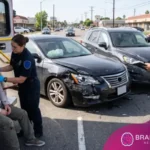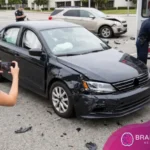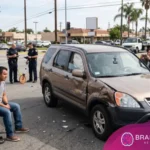


A car crash can unfold in seconds, while important evidence at the scene may disappear almost as quickly. Vehicles get towed, debris is cleared, skid marks fade, and road conditions change. For accident victims, those first few minutes can become important later, especially when neurological symptoms do not appear immediately.
That is why photos after a car accident can become valuable evidence in a traumatic brain injury, or TBI, claim. Photographs cannot diagnose a brain injury, but they can document vehicle damage, impact points, roadway conditions, visible injuries, and other details that help explain how the collision happened.
California’s roads continue to see thousands of serious crashes. According to the California Office of Traffic Safety, 4,061 people died in traffic crashes statewide in 2023, down nearly 11% from 4,539 in 2022.
For survivors, however, a nonfatal collision can still result in traumatic brain injuries, spinal cord injuries, significant medical expenses, lost income, and lasting pain and suffering.
Whether a collision occurs on I-405 in Los Angeles, at a neighborhood intersection, or on another California roadway, knowing what to photograph can help preserve evidence for a potential personal injury claim.
Why Are Photos Important in a Car Accident Brain Injury Claim?
A traumatic brain injury (TBI) is not always visible.
Unlike a broken bone or deep cut, a concussion may leave no obvious external mark. The CDC explains that mild TBI symptoms can affect thinking, memory, mood, balance, sleep, and vision. Some symptoms appear immediately, while others may take hours or days to become noticeable.
Because of that delay, photographs may preserve details before anyone knows the full extent of the injury.
Useful images may document:
- The severity of vehicle damage
- The direction of impact
- Airbag deployment
- Broken windows or windshields
- Interior vehicle damage
- Seat and headrest positions
- Road hazards
- Traffic-control devices
- Property damage
- Visible injuries
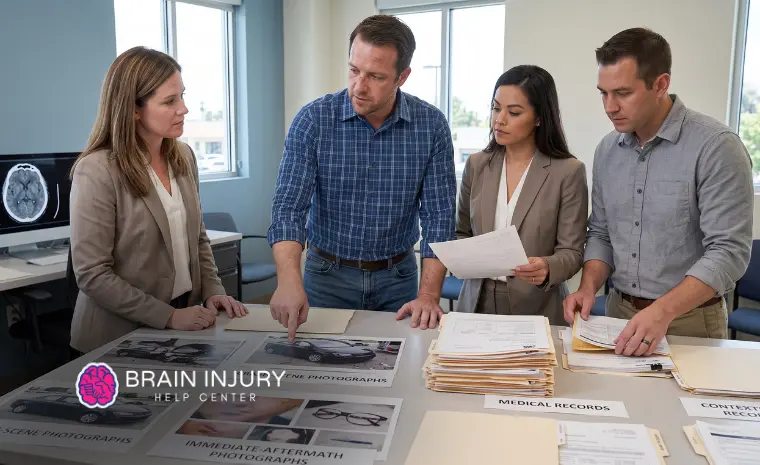
These images can complement medical records, police reports, witness statements, and expert analysis in complex personal injury cases.
The same principle applies beyond passenger-vehicle collisions. Photographic evidence may also become important after a truck accident or motorcycle accident involving a traumatic brain injury.
However, photographs should never replace medical care. If you develop neurological symptoms after a crash, seek professional evaluation promptly.
What Accident Scene Photos Should You Take?
If your injuries allow and you can remain in a safe location, take several photographs of the overall accident scene before vehicles are moved or debris is cleared. These images can help preserve important details that may later become relevant to a personal injury claim.
Try to document:
- All vehicles involved and where they came to rest
- The intersection, roadway, or highway where the collision occurred
- Traffic lanes, crosswalks, and road markings
- Traffic lights, stop signs, and yield signs
- Skid marks, debris, broken glass, and damaged vehicle parts
- Nearby buildings, driveways, and possible surveillance cameras
- Weather, lighting, and visibility conditions
- Damage to guardrails, signs, fences, or other surrounding property
Take both wide-angle images and closer photographs whenever possible. Wide views help establish the overall layout of the accident scene, while close-up images can capture specific impact points, debris, or property damage in greater detail.
Your safety should always come first. Do not walk into active traffic, stand in an unsafe location, or delay necessary medical care simply to take additional photographs.
Why Photograph Vehicle Damage and Points of Impact?
Vehicle damage can provide useful context about how a collision occurred and the forces involved. For accident victims later diagnosed with a traumatic brain injury, those images may help accident reconstruction experts and attorneys understand the direction and severity of the impact.
Take photographs that clearly show:
- Crushed bumpers and damaged body panels
- Bent doors or structural deformation
- Broken windshields and windows
- Deployed airbags
- Damaged headrests or seats
- Roof or passenger-compartment damage
- Broken glass and interior damage
- Tire, wheel, and suspension damage
Photograph every vehicle involved, not only your own. Images from several angles may help establish which parts of the vehicles made contact and how the collision progressed.
A personal injury attorney may also recommend preserving the vehicle itself when the crash involves catastrophic injuries, spinal cord injuries, or disputed impact forces. Repairs or disposal can sometimes eliminate physical evidence that an expert may need to inspect.
How Can Photos Document Road and Traffic Conditions?
Road conditions may become important when determining why an accident occurred. A driver may not be the only factor involved, especially when poor visibility, construction, defective signals, or roadway hazards contributed to the collision.
If it is safe to do so, take photographs showing:
- Potholes or damaged pavement
- Construction zones
- Road debris
- Missing or faded lane markings
- Obstructed traffic signs
- Standing water
- Poor street lighting
- Traffic signals
- Vegetation blocking visibility
- Weather and roadway conditions
It can also help to photograph the road from the direction each driver was traveling. These images may show sight distance, visibility, traffic control devices, or hazards that are difficult to explain later using words alone.
When property damage occurred outside the vehicles, photograph that as well. A damaged guardrail, sign, fence, or roadside structure may help explain the sequence and direction of the collision.
Should You Photograph Visible Injuries After a Car Accident?
If you are comfortable doing so, photographs of visible injuries can help document how your condition changed after the crash. Bruising, swelling, cuts, and other injuries may look different several hours or days later.
Consider documenting:
- Bruising and swelling
- Cuts or abrasions
- Facial injuries
- Head wounds
- Bandages or stitches
- Other visible physical injuries
Take follow-up photographs as injuries develop or heal. A series of dated images may provide a clearer picture of the recovery process than a single photograph taken immediately after the accident.
However, photographs do not replace medical treatment. Many traumatic brain injuries, spinal cord injuries, and other serious conditions may not be visible externally. Medical records, diagnostic testing, and healthcare provider evaluations remain essential evidence in a personal injury case.
Can Photos Help When Brain Injury Symptoms Appear Later?
Yes. This is one reason early documentation can be so important.
According to the Centers for Disease Control and Prevention, some concussion and mild TBI symptoms may not appear until hours or days after the injury.
Imagine leaving the accident scene believing you are simply shaken. Two days later, you begin experiencing:
- Persistent headaches
- Memory problems
- Light sensitivity
- Dizziness
- Difficulty concentrating
- Sleep disturbances
- Irritability
- Balance problems
The photographs you took immediately after the crash may help document the circumstances of the collision before those symptoms appeared.
They may show substantial vehicle deformation, airbag deployment, shattered windows, interior damage, or other evidence of the impact.
Photos alone cannot prove a TBI. Medical evidence remains essential.
However, photographs combined with neurological examinations, medical records, witness testimony, and expert analysis can contribute to the overall evidence supporting a claim.
A California injury attorney may use this information to evaluate medical expenses, lost income, future care, pain and suffering, and other damages.
How Should You Preserve Photos for a Brain Injury Claim?
Properly preserving your photographs can be just as important as taking them.
Keep the original digital files. Avoid relying only on screenshots, social media uploads, or compressed copies sent through messaging applications. Original files may contain useful metadata showing when an image was created.
Create secure backups. Store copies in more than one location, such as cloud storage, a computer, or an external drive. This reduces the risk of losing evidence if your phone is damaged or replaced.
Avoid editing the original images. Do not crop, filter, annotate, or alter the originals. If you need an edited copy for another purpose, create a duplicate first and preserve the untouched version.
Organize the evidence by category. Separate folders for the accident scene, vehicle damage, visible injuries, property damage, road conditions, and recovery timeline can make the evidence easier to review later.
Also, preserve related records such as police reports, medical expenses, repair estimates, insurance correspondence, towing records, and witness information. Together, these materials can help a law firm build a clearer picture of what happened and how the accident affected your health and finances.
How Can a Personal Injury Attorney Help?
TBI claims can involve complicated medical, insurance, and legal questions.
A California injury attorney may help by:
- Reviewing accident photographs
- Preserving original digital evidence
- Requesting surveillance footage
- Obtaining police reports
- Interviewing witnesses
- Reviewing medical records
- Evaluating medical expenses
- Working with accident reconstruction experts
- Consulting neurological specialists
- Documenting pain and suffering
- Investigating available insurance coverage
- Calculating lost income and future care needs
- Monitoring the statute of limitations
- Negotiating with insurance companies
- Preparing a lawsuit when necessary
The goal of a claim is to pursue compensation supported by the evidence and applicable law. No attorney or law firm can guarantee the maximum compensation available, since outcomes depend on liability, injuries, insurance coverage, available evidence, and other circumstances.
Many personal injury firms handle qualifying cases on a contingency fee basis. This generally means attorney fees depend on obtaining a recovery, although the specific percentage, litigation costs, and other terms should be explained in the written fee agreement.
California generally provides a two-year limitations period for many injury lawsuits under California Code of Civil Procedure §335.1, although exceptions and shorter deadlines may apply.
In a fatal collision, eligible surviving family members may have a wrongful death claim rather than the injured person’s personal injury claim. Those cases involve separate damages and legal requirements.
For additional guidance, explore our brain injury resources.