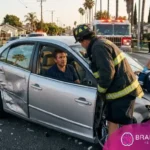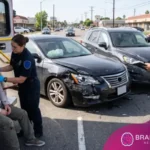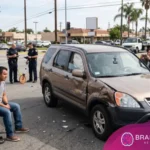



A pedestrian crash can turn an ordinary walk into months or years of recovery. When someone develops a traumatic brain injury after being struck, families may suddenly face treatment decisions, lost income, and questions about responsibility.
In California, who is liable for a pedestrian accident TBI depends on how the collision occurred, whether traffic rules were violated, and whether another person or organization helped create the danger. Some symptoms can also appear after the scene has cleared, making prompt medical attention and evidence preservation especially important.
Here is how California law approaches fault and what injured pedestrians can do to protect their rights.
How Is Liability Determined in a California Pedestrian Accident?
Liability usually begins with negligence: who owed a duty of care, who breached that duty, and whether the breach caused the injury. California law (California Vehicle Code § 21950) requires drivers to yield to pedestrians in marked and unmarked crosswalks at intersections, while pedestrians must also use reasonable care for their safety.
Investigators may examine speed, visibility, signals, distraction, impairment, road design, and pedestrian conduct. A medical evaluation can also connect the crash to a head injury, brain swelling, damaged brain tissue, or other symptoms of brain injury.
When Is a Driver Liable for a Pedestrian Accident TBI?
A driver may be liable when careless or unlawful driving causes pedestrian collisions. Common examples include:
- Speeding or driving too fast for conditions
- Failing to yield at a crosswalk
- Distracted or impaired driving
- Running a red light or stop sign
- Turning without checking for people crossing
- Backing out of a driveway or parking space without adequate care
Vehicle accidents involving pedestrians can cause severe injuries even at lower speeds. Unlike occupants of motor vehicles, pedestrians have little physical protection.
A brain injury attorney in Los Angeles can review the circumstances, identify available coverage, and determine whether the driver or another party may be legally responsible.
Can Other Parties Be Responsible for a Pedestrian Brain Injury?
The driver is not always the only potentially responsible party. Depending on the facts, liability may extend to an employer whose worker caused the crash while performing job duties, a vehicle owner, a manufacturer responsible for a defective component, or a public entity responsible for a dangerous roadway condition.
Poor lighting, malfunctioning signals, obstructed sightlines, or unsafe street design may also matter. Claims involving public entities can follow special procedures and shorter deadlines.
Similar multi-party issues can arise in a motorcycle accident. Brain injury lawyers may use accident reconstruction to determine how each party contributed.
How Does Comparative Fault Affect a Pedestrian TBI Claim?
California uses comparative fault. An injured pedestrian may still recover compensation when partly responsible, but the award can be reduced according to that person’s percentage of fault. California civil jury instructions use this proportional approach.
For example, a pedestrian crossing outside a marked area may still have a claim if a speeding driver had enough time to avoid the impact. This is why insurance companies often focus closely on pedestrian conduct.
Early legal representation can help challenge unsupported blame and protect the value of personal injury claims.
Evidence That Can Help Prove Liability for a Pedestrian Accident TBI
Evidence can disappear quickly. Victims and families should preserve what they can without delaying medical care.
Evidence | Why It Matters |
Police or accident reports | Records scene details, parties, citations, and initial observations |
Witness statements | Helps establish signals, speed, visibility, and driver behavior |
Photos or video | Shows the road, vehicle damage, crosswalk, lighting, and conditions |
Medical records | Connects the collision with diagnosis, treatment, Cognitive impairments, blurred vision, or brain damage |
Financial records | Helps document wage loss and other economic harm |
Also, preserve surveillance footage, vehicle data, phone records, and receipts. Useful cost documentation may include Medical bills, hospital bills, medical equipment, physical therapy, therapy costs, and other medical expenses.
A catastrophic brain injury can create long-term disabilities and substantial long-term care needs. Damages may also reflect reduced earning ability and effects on emotional well-being or emotional suffering.
Most lawsuits in California for injury caused by another person’s wrongful act or neglect generally must be filed within two years, although exceptions can apply. A brain injury attorney Los Angeles can evaluate deadlines, evidence, and available legal options.