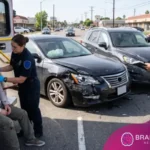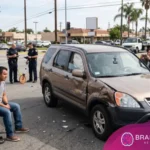


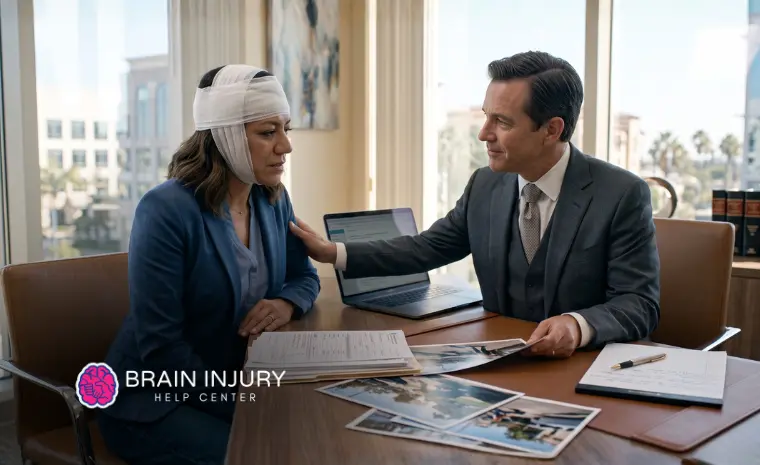
A person crossing a street has almost no physical protection when a vehicle strikes them. For victims of pedestrian accident brain injuries, California cases may involve emergency care, lost income, insurance disputes, and questions about long-term recovery.
Even a lower-speed impact can throw someone onto a hood, windshield, curb, or pavement, causing brain trauma that may not be obvious at the scene. Across California, busy freeways, urban intersections, transit hubs, schools, and commercial districts can increase pedestrian exposure to serious traffic collisions.
This guide explains how these injuries happen, which California laws may apply, and what steps can help protect a claim.
How Do Pedestrian Accidents Cause Traumatic Brain Injuries?
A pedestrian can sustain a traumatic brain injury when the head strikes a vehicle, roadway, or fixed object. Rapid acceleration and deceleration can also move the brain within the skull without a direct blow to the head.
Common mechanisms include:
- A frontal impact that throws the pedestrian onto the vehicle
- A secondary impact with the pavement after the collision
- A sideswipe that causes a hard fall
- A high-speed crash causing neurological damage
Similar risks affect San Diego, Riverside, San Bernardino, and Orange County, where traffic congestion can increase exposure.
The Centers for Disease Control and Prevention reported that from January 2021 through December 2023, about 301 million emergency department visits were identified through its National Syndromic Surveillance Program.
Of those visits, 137,325 involved pedestrian injuries, or 45.62 per 100,000 visits. These statistics reflect emergency department visits for pedestrian injuries broadly, not only TBIs.
What Are the Signs and Long-Term Effects of a Pedestrian Brain Injury?
Symptoms may appear immediately or develop after the time of injury. A concussion can produce subtle symptoms that are easy to overlook.
Warning signs include:
- Headache, dizziness, or problems with balance
- Changes in vision, memory, or concentration
- Confusion, fatigue, agitation, or changes in mood
- Nausea, sleep changes, weakness, or reduced awareness
Severe brain injuries can lead to hospitalizations, complications, or an inability to work independently. Recovery may require medical treatment, physical therapy, speech therapy, occupational therapy, mental health professionals, and rehabilitation.
Prompt medical care can document symptom progression, while a specialist may identify changes that were initially missed.
Who Can Be Liable for a Pedestrian Accident Brain Injury in California?
Liability depends on the facts. California law generally allows injured pedestrians to pursue a claim when another party’s negligence contributes to the accident and the resulting injuries.
Vehicle Code Section 21950 requires drivers to yield to pedestrians in marked and unmarked crosswalks under specified circumstances, while Section 21954 addresses pedestrian crossings outside a marked or unmarked crosswalk.
Potentially responsible parties may include:
- A driver who failed to yield, sped, or drove distracted
- An employer when a driver was acting within the scope of work
- A vehicle owner or another negligent party
- A public entity, if a dangerous roadway condition contributed
California uses comparative fault. A pedestrian’s share of responsibility can reduce damages rather than automatically eliminate recovery; California’s current civil jury instructions address apportionment of responsibility.
Public-entity cases can have shorter procedural deadlines. Claims involving a public entity may have much shorter notice requirements than those in standard personal injury cases, so acting promptly can be important.
What Damages Can You Recover for a Pedestrian Brain Injury?
A claim may seek compensation for losses such as:
- Past and future healthcare expenses
- Lost wages and reduced earning capacity
- Long-term therapy and supportive services
- Pain, emotional distress, and reduced quality of life
- Other documented accident-related losses
Medical records can connect a diagnosis to treatment and future needs. Expert testimony may address prognosis, while accident reconstruction can help assess speed, visibility, impact location, or collision sequence.
A personal injury attorney may also examine insurance coverage and identify responsible parties. California generally allows injured people two years from the date of the accident to file a personal injury lawsuit, though exceptions and shorter deadlines may apply in certain cases.
What Should You Do After Suffering a Brain Injury in a Pedestrian Accident?
After a pedestrian accident, brain injury victims in California should prioritize safety and preserve reliable evidence.
When possible:
- Call 911 and seek evaluation for head-impact symptoms
- Report the collision to law enforcement
- Photograph the crosswalk, traffic signals, roadway, vehicle, and visible injuries
- Collect witness names and contact information
- Preserve clothing, damaged belongings, and video
- Track expenses, missed work, symptoms, and follow-up visits
- Be cautious with detailed recorded insurer statements before learning your rights
This matters after car accidents near Wilshire Boulevard, Sunset Boulevard, I-405, or Griffith Park, where cameras, witnesses, and traffic conditions may affect the evidence.
A California brain injury attorney can review fault, insurance issues, deadlines, and whether a lawsuit is appropriate.